Small Block Chevy 350 Build Pt.1 | Lifting This Engine Without Breaking It
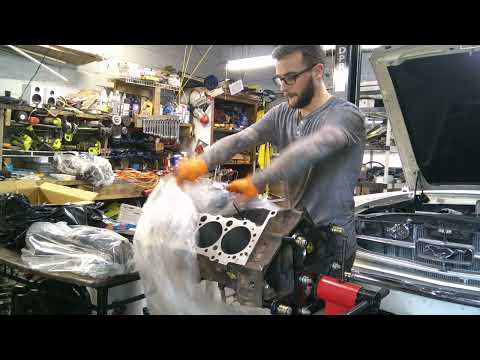
This video is the first part of a Small Block Chevy 350 build and focuses on safely lifting and moving the engine without causing damage. It covers preparation, selecting proper lifting points and hardware (hoist, load leveler, chains), and transferring the engine from the car to an engine stand for further disassembly.
Build Sequence
1. Work area and safety prep
Clear the garage floor, set adequate lighting, put down drip pans, wear PPE, and ensure the hoist and stand are rated for the weight of a SBC 350 (~300-400 lb). Place jack stands under car and chock wheels if vehicle is on the ground.
2. Drain all fluids
Drain engine oil and coolant into appropriate containers to prevent spills during the lift. Remove the radiator hoses or any lines that could catch while lifting.
3. Disconnect accessories and wiring
Remove the battery cables, alternator, power steering pump or disconnect its lines, AC compressor or unbolt and move aside if leaving attached, fuel lines, and all electrical connectors between engine and chassis. Label connectors for reassembly.
4. Support transmission and remove motor mounts
Support the transmission with a jack and a block of wood or stand. Remove engine mount bolts from the chassis and engine. Leave the transmission supported so it doesn't drop when the motor separates.
5. Decide lifting points and install hardware
Choose proper lifting points (bellhousing bolt area, intake manifold bolt holes with adapters, or threaded head/eye bolts). Install rated eye bolts or use an engine lifting plate. Attach chains to the load leveler and hook them to the selected lifting points.
6. Attach load leveler and test lift angle
Connect the load leveler to the hoist hook and attach chains. Lift slightly to take the engine weight and adjust the leveler to set a safe angle that clears the hood, firewall and oil pan. Verify nothing binds and the engine clears all points.
7. Slowly lift engine out of bay
Raise the hoist slowly and have a helper guide hoses/wiring. Walk around the engine to confirm clearance and correct any snagging. Use pry bar or small adjustments to coax mounts free as needed.
8. Transport engine to stand and lower
Move the hoist with the engine to the engine stand area. Use the load leveler to align the engine stand adapter to the rear/front mounting pattern, then lower the engine onto the stand and bolt it securely using the adapter plate and provided bolts.
9. Double-check fasteners and secure
Tighten the engine-to-stand bolts to recommended torque, secure any straps as a backup, and rotate the engine on the stand to inspect mounts, bellhousing, and oil pan for damage.
10. Initial inspection and cleanup
Inspect the engine for external damage incurred during removal, note any parts to replace during the build (gaskets, seals), clean the work area and properly store fluids and fasteners.
Frequently Asked Questions
What are the safest lifting points on a Small Block Chevy 350?
Use the bellhousing or transmission-side threaded holes when available, an engine lifting plate that uses intake manifold or head bolts, or grade-rated eye bolts installed into known strong points. Avoid picking the engine up by accessories or only by the intake manifold without proper hardware.
VIEW FULL ARTICLE →Do I need a load leveler?
A load leveler is highly recommended—especially on V8s—because it lets you change the tilt of the engine to clear the firewall, hood, and oil pan and makes transferring to an engine stand much easier and safer.
VIEW FULL ARTICLE →Can I lift the engine with the transmission attached?
You can lift with the transmission attached only if the hoist, chains, and vehicle supports are rated and if you support the transmission properly. Most DIYers separate the transmission first to make the lift lighter and easier to position on the engine stand.
VIEW FULL ARTICLE →How do I avoid cracking the oil pan while lifting?
Ensure the engine is lifted from proper points and kept level enough that the oil pan doesn't hit subframe or crossmember. Use a load leveler to adjust tilt and have helpers watch clearance as you raise the engine.
VIEW FULL ARTICLE →What hoist capacity do I need for a SBC 350?
A 1-ton (2000 lb) hoist is more than adequate and gives a safety margin. Avoid using hoists with ratings close to the engine weight.
VIEW FULL ARTICLE →What should I do if the engine binds while lifting?
Lower back down, re-check all connections, remove any remaining fasteners or brackets, adjust the load leveler angle, and have someone guide the engine while you make small, controlled lifts. Never force the engine free.
VIEW FULL ARTICLE →Related Builds
 Small Block Chevy 350 Build Pt. 6 | This Is How It's Actually Supposed To Be Done
 Small Block Chevy 350 Build Pt.3 | Filing rings and checking main clearances
 Small Block Chevy 350 Build Pt.5 | Continued frustrations with rod clearances
 Small Block Chevy 350 Build Pt. 11 | Installing the intake manifold and figuring out sbc nuisances
 Small Block Chevy 350 Build Pt. 7 | Checking Crank Clearance and installing the rods.
 Small Block Chevy 350 Build Pt. 8 | Installing Camshaft and timing components
Parts Used (9)
3/4 ton - 1 ton rated shop crane used to lift the engine; choose capacity > engine weight.
Engine stand with correct mounting holes/adaptor for small block Chevy bolt pattern.
Allows angling the engine while lifting to avoid scraping transmission bellhousing or oil pan.
Chain or sling to connect engine to hoist; use rated hardware and inspect for damage.
Used between load leveler and chain to allow rotation and reduce binding.
Adapter to secure the engine to the stand using engine bolt pattern; may include crank or balancer bolt.
Grade-rated bolts used as temporary lifting points if using head or intake bolt locations.
Used as backup support while positioning the engine and securing to the stand.