How do I test for leaks safely after installation?
Documented on the Chevrolet Small Block 350 (sbc 350) build
Published May 27, 2026
Wipe all connections dry, then crank the engine briefly or prime the system while observing the pump and hose connections.
Full Answer
Wipe all connections dry, then crank the engine briefly or prime the system while observing the pump and hose connections. Use a drip pan and rags, and have a fire extinguisher handy. If you see leaks, stop immediately and tighten or replace the compromised part.
Documented In This Build
Related Knowledge
How do I know if my Small Block Chevy uses a mechanical or electric fuel pump?What torque should I use on the fuel pump mounting bolts?What should I check if the pump doesn't flow fuel after installation?Can I reuse old pump mounting bolts or gasket?How important is degreeing the cam?What torque sequence and values should I use for SBC heads?How do I set lifter preload or hydraulic lash?What should I do to prepare the engine for first start and break-in?
Related Parts
Mechanical fuel pump
Airtex (or equivalent)$45
Fuel pump mounting gasket
Fel-Pro (or equivalent)$6
Mounting bolts/studs and nuts set
$8
Fuel hose (3/8" ID recommended)
$12
Hose clamps (pair)
$3
Inline fuel filter
$10
Gasket maker / RTV or thread sealant
$5
Related Tools
Socket set / ratchet
Gasket scraper / razor blade
Shop rags / solvent
Fuel line wrench / open-end wrench
Pliers
Torque wrench
Related Videos
 Small Block Chevy 350 Build Pt. 6 | This Is How It's Actually Supposed To Be Done
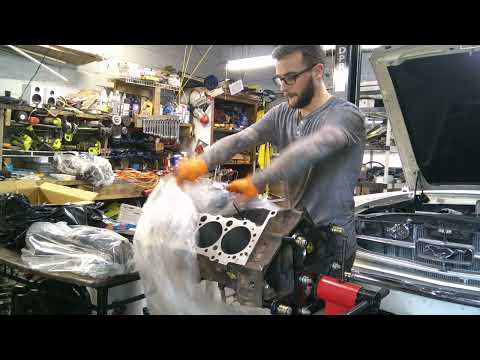 Small Block Chevy 350 Build Pt.3 | Filing rings and checking main clearances
 Small Block Chevy 350 Build Pt.5 | Continued frustrations with rod clearances
 Small Block Chevy 350 Build Pt. 11 | Installing the intake manifold and figuring out sbc nuisances
 Small Block Chevy 350 Build Pt. 7 | Checking Crank Clearance and installing the rods.
 Small Block Chevy 350 Build Pt. 8 | Installing Camshaft and timing components