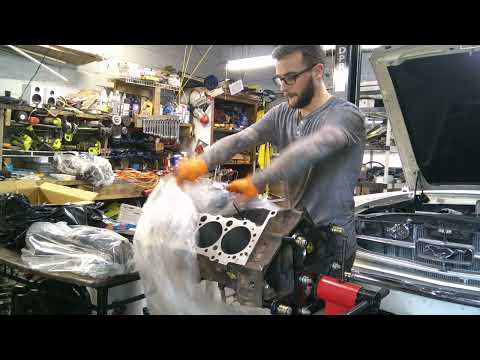
Small Block Chevy 350 Build Pt. 13 | Installing fuel pump and figuring out I missed some parts
This episode covers installing a mechanical fuel pump on a Small Block Chevy 350 and discovering that some required hardware and consumables were missing. The build includes preparing the mounting surface, fitting the pump and gasket, hooking up fuel lines and clamps, and testing for leaks, with a pause to source the missing parts.
Build Sequence
1. Prepare workspace and engine
Secure the engine on a stand (or vehicle on jack stands) and ensure the ignition is off and battery disconnected. Place drip pan and rags under the pump area to catch any fuel. Make sure you have all parts and tools gathered before starting.
2. Remove old pump and clean mounting surface
If replacing an old pump, remove the mounting bolts/studs and the pump. Inspect and clean the mating surface on the block with a gasket scraper and solvent, removing old gasket material and debris to ensure a good seal.
3. Inspect pushrod and pump compatibility
Check the pushrod for straightness and correct length/fit in the new pump's rocker-interface. Make sure the pump's lever will make proper contact with the pushrod; replace the pushrod if damaged or excessively worn.
4. Mock-fit gasket and pump
Place the new gasket onto the block and position the fuel pump against it to verify alignment and that mounting holes line up. Use any necessary studs/bolts to hold it in place before final installation.
5. Install pump and torque bolts
Install the pump with the gasket, thread the mounting bolts or nuts by hand, then torque to the manufacturer specification (commonly low ft-lb, typically around 15-20 ft-lbs for pump bolts). Avoid over-tightening to prevent warping the pump housing.
6. Connect fuel lines and clamps
Attach the fuel hose from the pump outlet to the carburetor or inline filter, secure with clamps, and tighten fittings. Install an inline fuel filter where appropriate and check that hose routing avoids heat and moving parts.
7. Prime and test for leaks
Prime the fuel system by cranking the engine (with ignition disabled if appropriate) or observing fuel flow, then check all connections and the pump body for leaks. Repair any leaks and retest until dry.
8. Address missing hardware and pause if needed
If you discover missing parts (mounting hardware, gasket, hose, clamps, or filter), document what's missing, order correct replacements, and pause the installation until they arrive. Double-check part compatibility for SBC 350 before reassembly.
Frequently Asked Questions
What torque should I use on the fuel pump mounting bolts?
Fuel pump mounting bolts are generally torqued to a low value to avoid distortion—typically around 10–20 ft-lbs. Consult the pump or engine manual for the exact spec; if unknown, tighten snugly and avoid over-torquing.
VIEW FULL ARTICLE →What should I check if the pump doesn't flow fuel after installation?
Verify the pushrod is contacting the pump lever correctly, ensure valves inside the pump are not stuck, check for blocked fuel lines or filter, confirm proper gasket/seal, and ensure there is fuel in the tank and correct routing to the pump.
VIEW FULL ARTICLE →Can I reuse old pump mounting bolts or gasket?
Mounting bolts can be reused if undamaged; studs should be replaced if threads are damaged or rusty. It's recommended to install a new gasket whenever you remove the pump to ensure a reliable seal.
VIEW FULL ARTICLE →How do I test for leaks safely after installation?
Wipe all connections dry, then crank the engine briefly or prime the system while observing the pump and hose connections. Use a drip pan and rags, and have a fire extinguisher handy. If you see leaks, stop immediately and tighten or replace the compromised part.
VIEW FULL ARTICLE →How do I know if my Small Block Chevy uses a mechanical or electric fuel pump?
Classic Small Block Chevy engines (carbureted) typically use a mechanical fuel pump mounted to the block driven by the camshaft. EFI conversions or modern setups may use an electric pump; inspect the existing pump location and fittings to confirm.
VIEW FULL ARTICLE →Related Builds
 Small Block Chevy 350 Build Pt. 6 | This Is How It's Actually Supposed To Be Done
 Small Block Chevy 350 Build Pt.3 | Filing rings and checking main clearances
 Small Block Chevy 350 Build Pt.5 | Continued frustrations with rod clearances
 Small Block Chevy 350 Build Pt. 11 | Installing the intake manifold and figuring out sbc nuisances
 Small Block Chevy 350 Build Pt. 7 | Checking Crank Clearance and installing the rods.
 Small Block Chevy 350 Build Pt. 8 | Installing Camshaft and timing components
Parts Used (7)
Mechanical in-block fuel pump for SBC 350; replace if worn or leaking.
Pump-to-block paper gasket; ensure correct orientation and clean mating surfaces.
Hardware to secure the pump; original studs/bolts are often reused but replace if missing or damaged.
Fuel-rated rubber hose for pump outlet to carburetor or inline filter.
Optional for sealing or light RTV if gasket is marginal; avoid getting sealant into pump cavity.