Do I need RTV sealant when installing intake gaskets?
Documented on the Chevrolet Small Block 350 (sbc 350) build
Published April 27, 2026
Only use a small amount of engine-safe RTV where the manufacturer recommends—typically at the water crossover ends or corners.
Full Answer
Only use a small amount of engine-safe RTV where the manufacturer recommends—typically at the water crossover ends or corners. Excess RTV can squeeze into passages and cause blockages, so use sparingly.
Documented In This Build
Related Knowledge
What torque spec and sequence should I use for an SBC 350 intake manifold?What clearance issues are common on SBC intake installs?Any tips for preventing vacuum/fuel leaks after installation?How important is degreeing the cam?What torque sequence and values should I use for SBC heads?How do I set lifter preload or hydraulic lash?What should I do to prepare the engine for first start and break-in?What torque should I use on the crankshaft bolt?
Related Parts
Intake manifold
$350
Intake manifold gasket set
$40
RTV silicone sealant (engine-safe)
$6
Intake bolts / studs & washers
$25
Carburetor (4-barrel)
$275
Related Tools
Torque wrench
Socket and ratchet set
Gasket scraper / razor
Shop rags / brake cleaner
Torque angle gauge or marking tool
Related Videos
 Small Block Chevy 350 Build Pt. 6 | This Is How It's Actually Supposed To Be Done
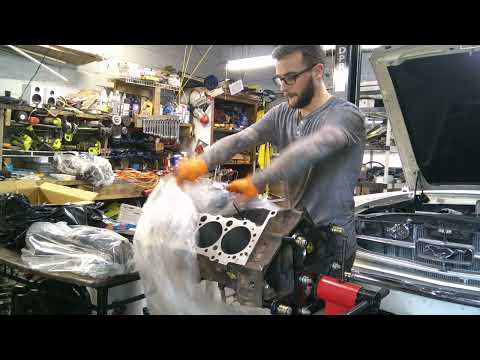 Small Block Chevy 350 Build Pt.3 | Filing rings and checking main clearances
 Small Block Chevy 350 Build Pt.5 | Continued frustrations with rod clearances
 Small Block Chevy 350 Build Pt. 7 | Checking Crank Clearance and installing the rods.
 Small Block Chevy 350 Build Pt. 8 | Installing Camshaft and timing components
 Small Block Chevy 350 Build Pt.1 | Lifting This Engine Without Breaking It