From cuts to custom fender wells on my Mustang pt 2
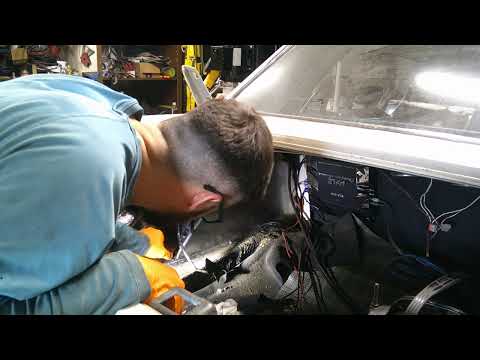
This video documents the second part of creating custom fender wells (wheel tubs) on a Mustang after initial cuts were made. The build covers shaping and fitting new sheet-metal tubs, welding them into the rear wheel openings, and preparing the seams for primer and paint to allow for increased wheel/tire clearance.
Build Sequence
1. Review and final cuts
Inspect the initial cuts made in part 1 and clean up the edges on the wheel opening. Remove any remaining factory lip or obstruction to prepare a clean flange for the new tub.
2. Mock-up and measure clearance
Mock-fit metal blanks or preformed tubs into the opening to determine required clearance for the desired wheel/tire combination. Mark trimming lines and overlap areas.
3. Form and shape tubs
Bend and shape sheet metal on a brake and with hammer/dolly to match the wheelhouse contour. Create flanges for welding to the existing body and shape inner transitions.
4. Test-fit and trim
Iteratively clamp the fabricated tubs in place, trim high spots, and adjust panels until fitment is even around the circumference and gives the necessary tire clearance.
5. Tack and weld panels
Tack weld the tubs into position, checking alignment, then stitch-weld or continuous-weld as needed. Grind welds flush and ensure the structure is solid.
6. Grind, fill, and blend seams
Grind welds smooth, apply body filler where transitions need smoothing, then sand and feather edges to prepare for primer.
7. Corrosion protection and seam sealing
Apply weld-through primer to any bare metal, seam seal the joints from the inside/outside as required, and mask off for final primer coat.
8. Final primer and prep for paint
Prime the repaired area, inspect for low/high spots, and final-sand to prepare for color coat or undercoating depending on finish plans.
Frequently Asked Questions
How much clearance should I allow for larger wheels/tires?
Aim for at least 3/8" to 1/2" of clearance from the tire to the new tub at suspension compression and full steering lock (if applicable). Exact clearance depends on tire size and suspension travel.
VIEW FULL ARTICLE →How should I protect the new metal from rust?
Use a weld-through primer on seams during welding, seam sealer on joins, and follow with epoxy or zinc-rich primer and appropriate topcoat or undercoating to seal the inside of the wheelwell.
VIEW FULL ARTICLE →What welding technique is recommended?
Stitch or plug welds are common to control heat distortion. Tack weld frequently, allow cooling, and grind/tidy welds between passes. Use an appropriately sized MIG wire and settings for thin sheet metal.
VIEW FULL ARTICLE →Do I need to use preformed tubs or can I fabricate from sheet metal?
You can do either. Preformed tubs save time and fitment work but can be more expensive and still require trimming. Fabricating from sheet metal is more labor-intensive but allows a fully custom shape for clearance and appearance.
VIEW FULL ARTICLE →Will this modification affect vehicle legality or safety?
Modifying fender wells to clear larger tires can affect splash protection and may be subject to local vehicle regulations. Ensure that tires do not protrude illegally and that the tubs are structurally sound and sealed to prevent debris from entering the cabin or suspension areas.
VIEW FULL ARTICLE →Related Builds
 From cuts to custom fender wells on my Mustang - FINAL
 From cuts to custom fender wells on my Mustang Pt 6
 From cuts to custom fender wells on my Mustang Pt 4
 From cuts to custom fender wells on my Mustang Pt 5
 From cuts to custom fender wells on my Mustang
 From cuts to custom fender wells on my Mustang part 3
Parts Used (8)
For smoothing seams and transitions prior to primer and paint.
Consumable for welding seams when installing tubs.
General sheet metal used to fabricate custom wheel tubs; gauge estimated from common practice. Quantity estimated for two rear tubs.
Listed as an optional off-the-shelf alternative to fabricating from sheet metal; price represents a pair from aftermarket suppliers.
Used for tacking panels or securing trim. Quantity and type vary by build.