What signs indicate a problem after installing heads and lifters?
Documented on the Chevrolet Small-Block Chevy 350 build
Published March 28, 2026
Noisy valvetrain (ticking or clacking), low oil pressure, or inability to rotate the engine by hand can indicate improper assembly, incorrect lifter seating, wrong pushrod lengths, or torquing errors.
Full Answer
Noisy valvetrain (ticking or clacking), low oil pressure, or inability to rotate the engine by hand can indicate improper assembly, incorrect lifter seating, wrong pushrod lengths, or torquing errors. Stop and diagnose before running the engine.
Documented In This Build
Related Knowledge
How do I prime hydraulic lifters before installation?What torque sequence and values should I use for SBC 350 heads?How can I tell if a lifter is the correct type for my cam?Do I need to replace my head bolts or can I reuse them?How important is degreeing the cam?What torque sequence and values should I use for SBC heads?How do I set lifter preload or hydraulic lash?What should I do to prepare the engine for first start and break-in?
Related Parts
Pushrods
$40
Assembly lube
$12
Head gasket set (pair)
$60
Hydraulic lifter set
$120
Cylinder heads (pair)
$800
Head bolts / studs
$120
Valve cover gaskets
$20
Related Tools
Socket set and ratchet
Engine stand
Feeler gauge / dial indicator
Magnet or lifter tray
Clean shop rags / solvent
Torque wrench
Related Videos
 Small Block Chevy 350 Build Pt. 10 | Checking out a new intake and talking about things left to do
 This 65 Mustang Keeps Throwing Curveballs
 Small Block Chevy 350 Build Pt. 6 | This Is How It's Actually Supposed To Be Done
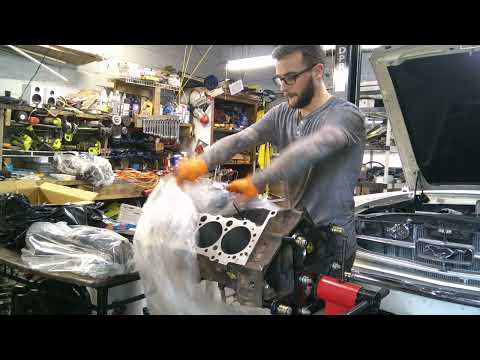 Small Block Chevy 350 Build Pt.3 | Filing rings and checking main clearances
 Cub Cadet Ultima Z2 54 5 hour +some maintenance video
 Small Block Chevy 350 Build Pt.5 | Continued frustrations with rod clearances